Money maps
Four layers, then a reading.
A money map is a large sheet for one household year. It is drawn in this room, from your papers, and it is meant to be read aloud. The layers below are the order Niramol uses. They are not a template you are asked to finish alone.
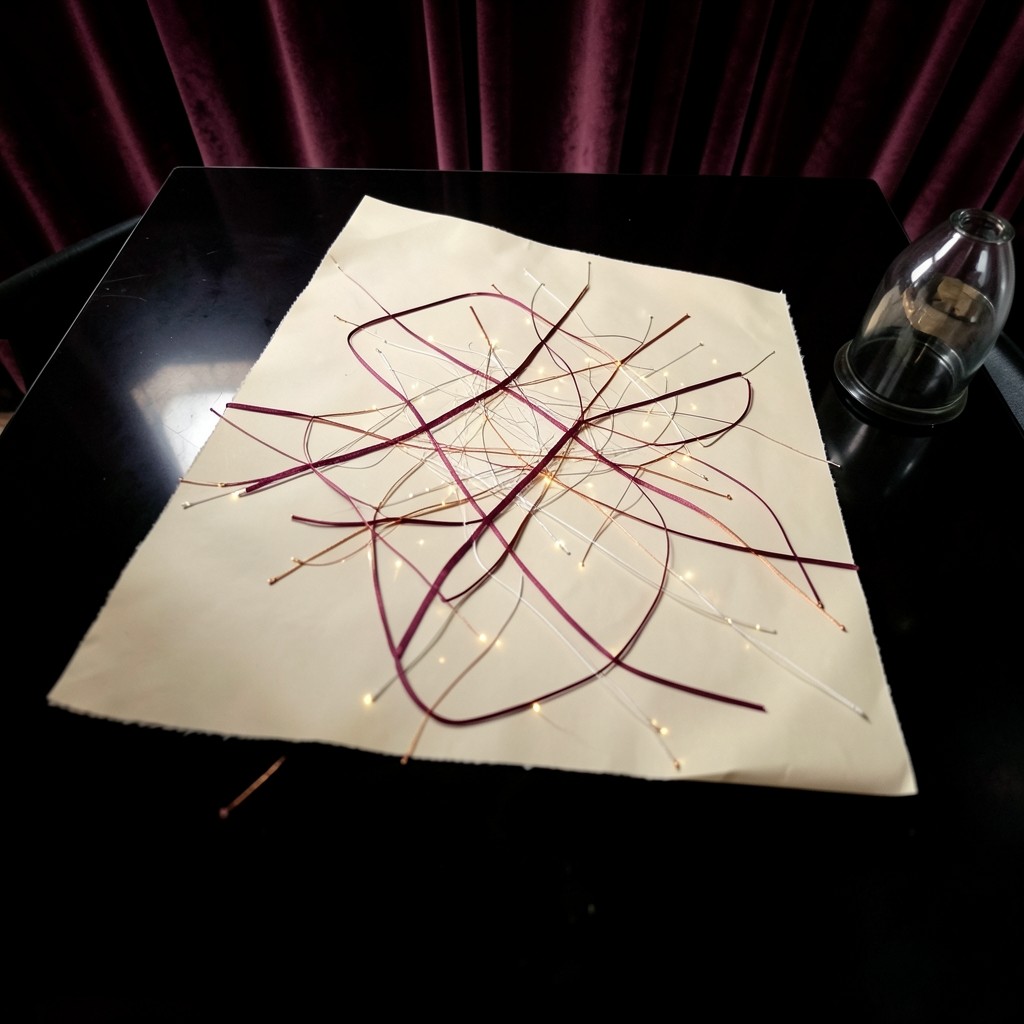
Layer one
The income ribbon
Wages run across the top as a ribbon that gets thinner where overtime disappears and thicker where a bonus is actually written down. A spouse’s pay is a second ribbon, not a blended total. Help from a parent is a short bar in the month it arrives, not a monthly fantasy.
Layer two
Obligation stones
Rent, the condo fee, the home loan, school invoices, and each installment sit on the months they leave. A balloon payment is its own stone. We do not sand them down into equal monthly pebbles. If two stones land together, the collision stays visible. That is usually the month the household has been arguing about.
Layer three
Seasonal markers
Songkran travel, the May school payment, the later term invoice, a visit to a hometown, and the New Year table are pins, not a lifestyle category. If you skip Songkran this year, the pin comes off. If you only hope to skip it, the pin stays and is marked as undecided.
Layer four
The reserve well
The cash tin sits near the months, because it is what you reach for on the twentieth. Gold, a provident fund, or a passbook you have agreed not to touch sits in a well at the side, with the name of the person who must agree before it moves. The well is drawn so it cannot be casually poured into a crowded month.
What the finished sheet is for
You take the print home. The written note lists only the decisions you confirmed: a trip made smaller, a restock day moved, a gold sale declined. The Household Money Map is the sitting that produces this sheet. A shop that needs its weekdays kept separate starts with the ledger review instead.